

Feeling Lonely? You’re Not Alone
About loneliness
Many of us feel lonely from time to time. Feelings of loneliness are personal, so everyone's experience will be different. Some people describe loneliness as the feeling we have when our need for social contact and relationships isn’t met. But loneliness isn’t the same as being alone.
You may feel content without much contact with other people. But others may find this a lonely experience.
Some people may only feel lonely at certain times. But some people may experience chronic loneliness. This is a deep feeling of loneliness that goes on for a long time. You may be around others and still feel like you’re alone.
“One thing I've learned is the difference between feeling alone and feeling lonely — and how you can feel lonely in a crowd full of people, but quite peaceful and content when alone.”
Some people might think that you need to live alone to feel lonely. Or that being lonely means not having many friends or family around you. But you can have lots of social contact and support and still feel lonely. Especially if you don't feel understood or cared for by the people around you.
Is loneliness a mental health problem?
Feeling lonely isn't a mental health problem. But having a mental health problem can increase feelings of loneliness. For example, if you’re struggling with your mental health, you may:
Avoid social events and activities you usually enjoy
Have low self-esteem
Find it hard to try new things and worry about engaging with others
Find it difficult to speak to people about how you’re feeling, for fear of stigma or not being understood
Feel like you could be a burden to others
Feel overwhelmed in busy public places, or at work events and parties
I want to be able to interact with people and make new connections, but my anxiety feels like an invisible barrier that I can't break through.
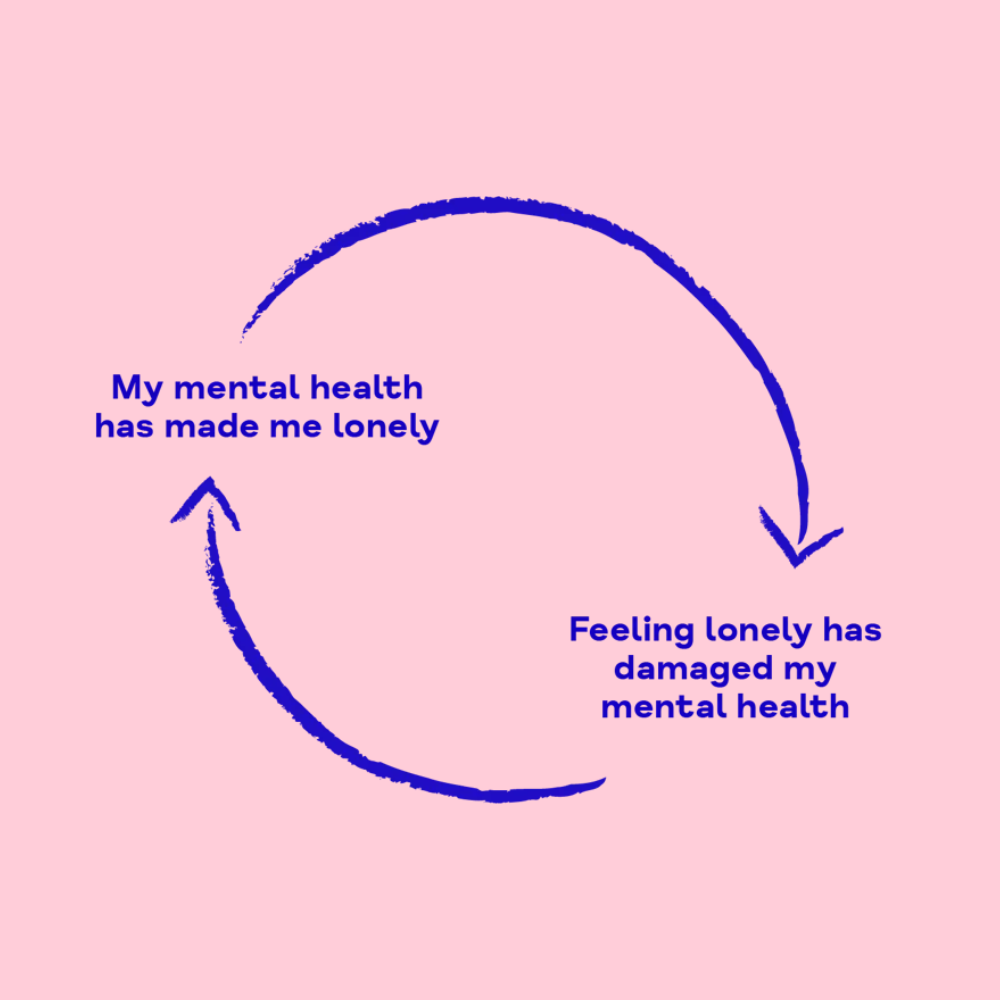
Feeling lonely can have a negative impact on your mental health, especially if you've felt lonely for a long time. Some research suggests that loneliness can increase stress. It's also associated with an increased risk of certain mental health problems. For example, depression, anxiety, low self-esteem, and sleep problems.
“I want to be able to interact with people and make new connections, but my anxiety feels like an invisible barrier that I can't break through.”
What causes loneliness?
Loneliness has many different causes. These vary from person to person. We don't always understand what it is about an experience that makes us feel lonely. Certain life events or experiences may make you feel lonely, such as:
Experiencing a bereavement
Going through a relationship break-up
Retirement
Changing jobs
Starting at university
Experiencing mental health problems
Becoming a parent
Moving to a new area or country without family, friends, or community networks
You may feel lonely at certain times of the year. For example, around holidays like Christmas, Ramadan, or Valentine's Day
How can I manage loneliness?
Some people can find the ideas below useful. But remember that different things work for different people at different times. Only try what you feel comfortable with, and try not to put too much pressure on yourself. If something isn't working for you (or doesn't feel possible just now), you can try something else or come back to it another time.
Learn more about being comfortable in your own company
Try to open up to people you know
Take it slow
Make new connections
Try not to compare yourself to others
Look after yourself both mentally and physically
Consider trying talking therapies or support groups
Personal experiences and tips from a few of our team members
Loneliness can feel different for everyone, and each of us has our own ways of coping and finding connection. A few of our team members share their personal experiences and the tips that have helped them along the way.
“In my early twenties, I went to live in China. I had been fortunate enough to have been hired as an ESL teacher at an English training centre in a city called Hangzhou. The city itself is a beautiful one, and the many people I met were wholly welcoming. As my first month living and working in China drew to a close, however, I can remember becoming increasingly conscious of just how far I was from my circle of friends and family, from my childhood home. Despite the warmth of my colleagues and the wholesome distraction of learning to teach young children English, my sense of distance from home and my isolation only increased. This persisted for several months, and I would occasionally feel crushed beneath the weight of what I felt at the time to be a profound sense of loneliness.
After about half-a-year living this way, I came close to calling it a day, to returning home. I decided to give things one more month, and to this day I remain grateful that, for whatever reason, I opted to do so. Over the course of that month, and beyond, I felt increasingly integrated into the community at the training centre and the bustling rhythms of life in a Chinese city. Colleagues became friends, my identity as an ESL teacher began to take shape, and my thoughts and feelings about home began to shift. Of course, I still missed my family, my circle of friends in England and the house that I grew up in. Missing them, however, was now held in a broader frame of what felt like an increasingly rich and inviting present. In the end, that present stretched into seven happy years of life in China, seven years which continue to mould who I am even today.” — Ed
“Everyone feels lonely from time to time, and it’s a normal part of life to experience it occasionally. Unfortunately, however, today’s society seems to be making us more disconnected from each other, despite the increased access to contact methods via social media. Some things that have helped me in the past when I have felt loneliness are:
Finding an enjoyable solo hobby, like doing a craft project or puzzle
Calling a friend or family member for a chat
Watching a comforting film or TV show
Getting outside for a walk, even if it’s only 5 minutes
Engaging with community events and connecting with the local neighbourhood
Remember, there is always someone you can reach out to.” — Rach
“At 30 years old, finding myself alone, due to a marriage breakdown, with a 7-month-old baby, felt like the loneliest time of my life. Even though I had the support of my family, when evening came around, being alone with a young baby and no one there to help you do bed times and share the milestones made me feel so alone.
I realised I needed to get myself out there and find other people in similar situations, by looking at going to groups relating to my situation. I started attending and found myself talking and relating to people in the same situation as myself. I started to feel less lonely and realised that I wasn’t the only one in my situation and that there are other people going through exactly the same thing.
Always remember that if you feel alone, there are always other people who feel exactly the same and are in the same position as you, which can make you feel a lot less lonely.” — Karen
“I’ve noticed that I often feel lonelier when I am also experiencing stress, overwhelm, or anxious feelings. In those moments, it can feel like I’m trapped inside my own head, thoughts, and the bigger life events taking place. When I feel this disconnection, reaching out to loved ones can feel even more difficult, but talking always helps and stops me from isolating myself further.
Connecting with nature also helps. Going for a walk, hearing the birds, watching the sheep graze, and noticing the changing seasons make me feel part of something bigger—less alone, even when I am. Taking the time to breathe and notice life around me helps shift and broaden my perspective. By the time I return, I inevitably feel a renewed sense of gratitude and connection.” — Danielle
Useful tips to manage loneliness
Connect with existing social networks and reconnect with old ones
Create a healthy limit for online and social media usage
Reach out to someone or a service if you feel you need to talk
Practice hobbies and learn some new ones
Engage in creative activities, such as art, music, writing, etc.
Use coping strategies if overwhelmed
Exercise is not only very effective for our mental and physical health, but it can also be a highly effective tool for combating loneliness.
— James